Understanding reuse across government
We’ve been researching how people across government find, share and reuse existing work. This page summarises what we’ve learned about users, their needs and the barriers to reuse.
Users and behaviours
We’ve identified 4 emerging behaviour types based on how people approach reuse. These are not fixed groups or job roles. People may move between them depending on what they’re doing.
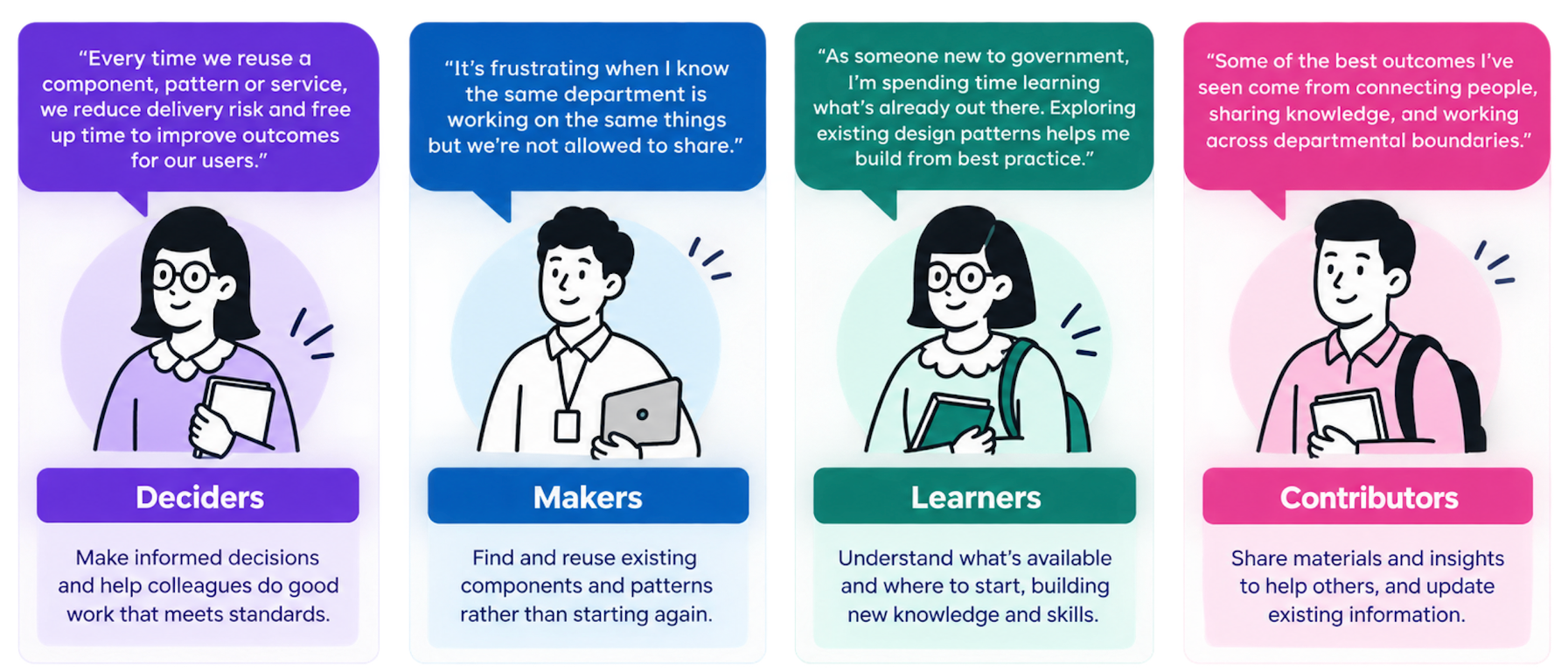
Deciders
People making decisions about services. They need to manage risks, meet standards and be confident that existing work is suitable for their service.
Makers
People designing and developing services. They need to find and use existing components, patterns and guidance to avoid duplicating work.
Learners
People building their knowledge of government services and how they work. They need to understand what’s available, where to start and who can help.
Contributors
People sharing work that others could reuse. They need clear ways to contribute resources and help others find and use them.
User needs and barriers
Our research has identified 6 areas of user need related to reusing existing work, along with common barriers that can make reuse difficult.
Finding resources
Resources are spread across departments and websites. People may not know where to search or what terms to use.
People need to:
- find relevant resources before creating something new
- know where to look across government
Trusting resources
People cannot always tell whether a resource is current, accessible, tested or appropriate for their service.
People need to:
- know whether resources are current and maintained
- understand whether they’ve been researched and tested for accessibility
Understanding the context
Resources do not always include enough guidance or examples to help people decide whether they can use them.
People need to:
- understand why and how something was created
- see examples of where it has been used
Connecting with others
People often rely on colleagues and communities to find existing work. This can make reuse harder for those without established networks.
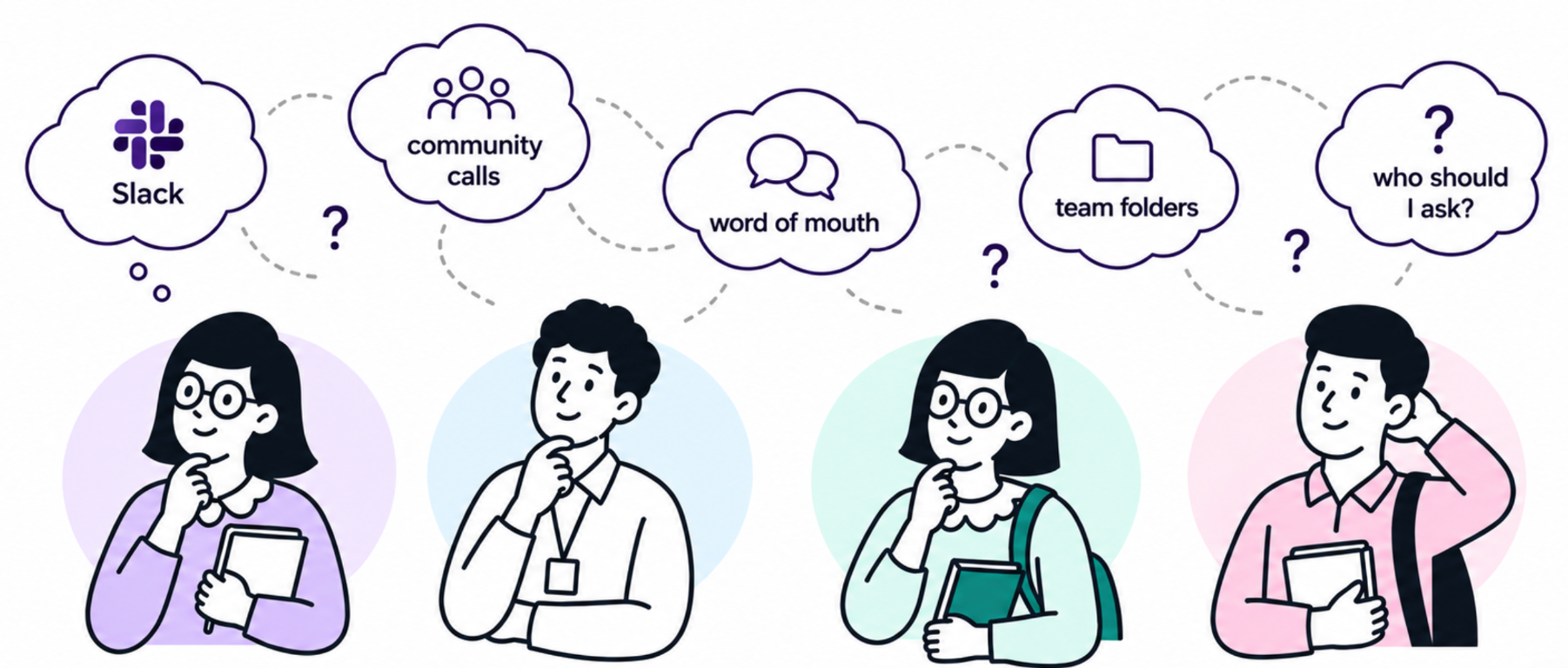
People need to:
- find teams working on similar problems
- learn from their experiences and decisions
Understanding standards and ownership
Differences in how departments organise, describe and maintain resources make it harder to find and reuse work across government.
People need to:
- know who owns and maintains a resource
- understand how to contribute and what standards to follow
Using and adapting resources
People need to:
- know when and how to use existing resources
- understand how to adapt them for their service
What we’ve learned
People search in different ways
Some people search for a specific component or pattern. Others start with a problem they need to solve. Experience affects how people search and what guidance they need.
Finding a resource does not mean someone will use it
People need evidence, examples and information about accessibility and maintenance before deciding whether to reuse something.
Communities help people reuse work
People use departmental and cross-government communities to discover resources, ask questions and learn from other teams.
Examples help people make decisions
Seeing how a component or pattern has been used in a live service helps people decide whether it could work for them. Templates support people in creating consistency in government services.
New starters need clear guidance
People new to government are not always introduced to design systems or other reusable resources. Bringing information together can help, but too much information can be overwhelming.
How we’re using our research
Our findings are helping us:
- explore ways to search across government design systems using everyday language
- improve guidance for people getting started with reuse
- understand what information people need before adopting a resource
- make it easier to share and contribute reusable work
Ongoing research
We’re continuing to research:
- how well the GOV Reuse Library meets users’ needs
- what helps people decide whether to reuse existing work
- how to improve the contribution process
- how reuse works across local government
This research involves colleagues from the Ministry of Justice, Home Office, Government Digital Service and other government departments.
Sign up to take part in research to help inform and improve the GOV Reuse Library.